1, Introduction
This is my first assignment for the Professional Literacies class. This is my first time to write a opinion piece. I barely knew what an opinion piece is. Different from academic articles, the opinion piece is for the general public. I’ve written an academic research essay about this Cold War topic. I wrote this opinion piece on the basis of my research essay. I would like to thank Janne for her generous advice.
2, Opinion Piece
Outbreak of the Cold War: A Review of the Ideological Conflict
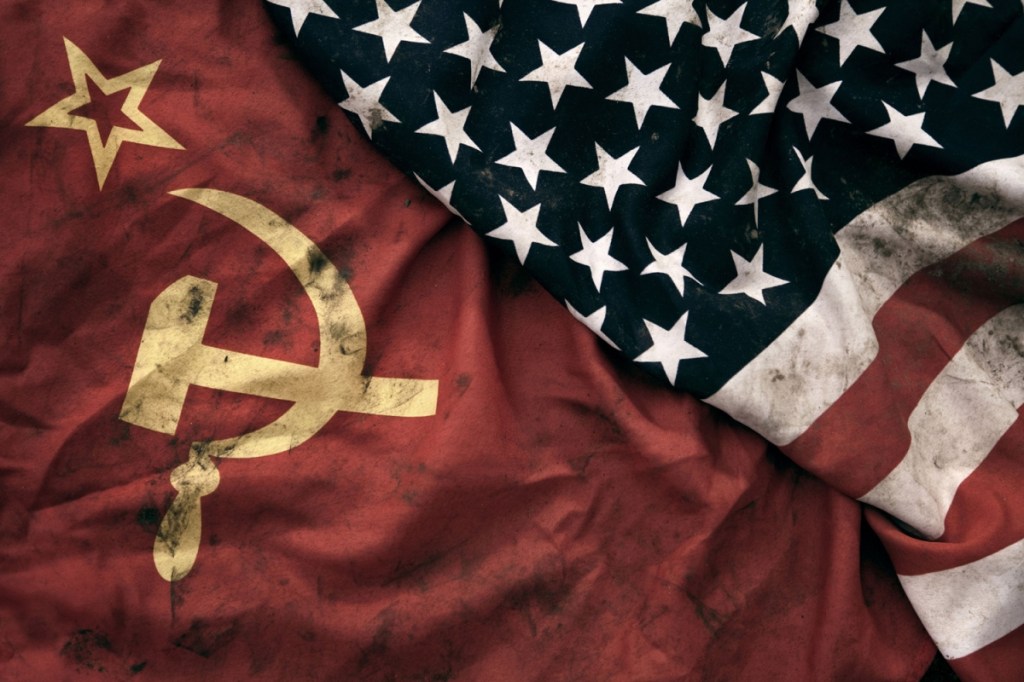
The Cold War is one of the most important events in the 20th Century. “War” is usually used to describe the armed conflict between states, governments or between other kinds of military groups, and is always characterized as horrible and violent. However, the “Cold War” in the 20th Century was a war, that had no direct military conflict between the two superpowers, the United States America (USA) and the Union of Soviet Socialist Republic (USSR).
Before the Cold War, the America and the Soviet Union were allies, during the World War II, from 1939 to 1945, and fought together against the Axis, which was an alliance of Nazi Germany and some other countries. After the Axis was defeated, these two superpowers soon became nemesis, and divided the whole world into two political camps: the capitalist camp and the communist camp. During the Cold War, both the U.S.A. and the U.S.S.R. were competing through the arm races, competition in resource, information and technology and proxy war, they fought against each other. Finally, in year 1991, the Cold War ended in the collapse of the Soviet Union.
Why would these two allies, who fought together in the W.W.II, soon became enemies? The reasons for that are multiple and complex. I believe that the most important reason is the ideological distinction between the two super power: The Liberalism of the U.S.A. and the Communism of the Soviet Union.
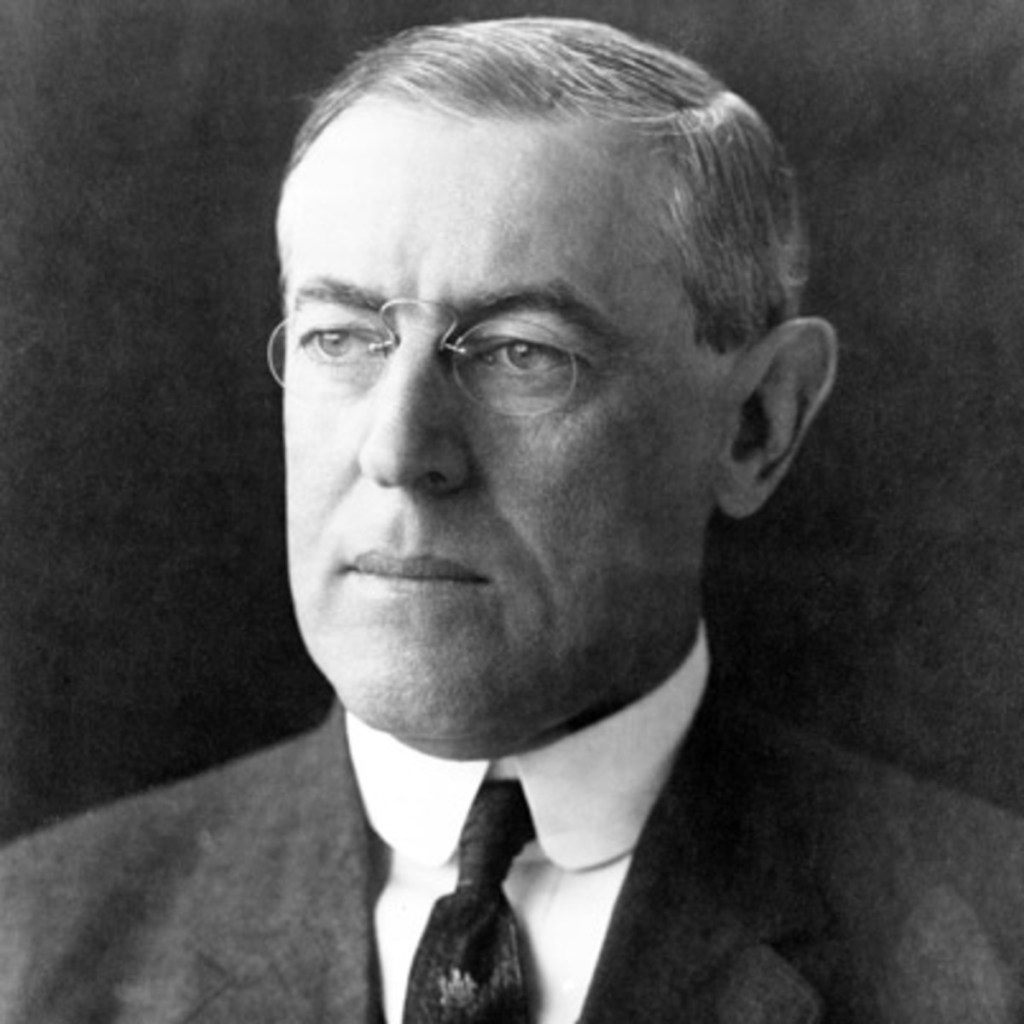
https://www.biography.com/us-president/woodrow-wilson
The Ideology of the U.S.A. is Liberalism. It showed itself on the American stage a long time ago. In the Declaration of Independence, which was regarded as a foundation of the U.S.A, in 1776 it was written that “all man” have the right to pursue Liberty. The ideology of the American was that they wanted to spread their concept of Liberty to the whole world. For example, in 1917, right after the first World War broke out, the 28th. President of America, Woodrow Wilson, said that the USA ought to fight for the “ultimate peace of the world and for the liberation of its peoples”, and the world peace must be based on the “foundations of political liberty”.
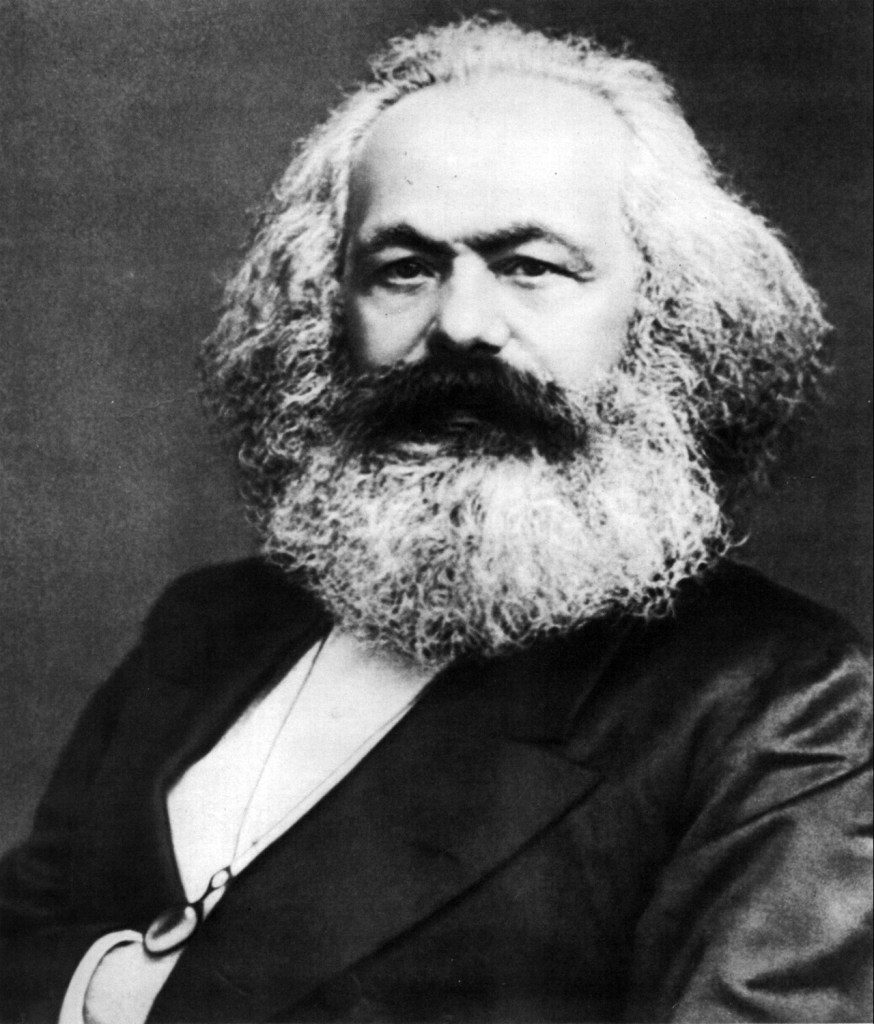
The ideology of the U.S.S.R. is the Communism, which originates from Marxism, which was founded by Karl Marx. Marx was a German philosopher, economist, and the author of The Communist Manifesto. Marx believed that, the Bourgeoisie rules the workers’ class, and as the higher class in the capitalism society. The Bourgeoisie are mostly factory and company owners, and they extracts the value of workers by forcing them to have extra work. They He also believed that the history would show that a revolution of Proletarian, the workers’ class, will come and eliminate the capitalism and the Bourgeoisie, and then there will be an era of Communism and all human kind will be truly liberated. Deeply affected by the Marxism, the Russian Communists considered the government of other western countries as Bourgeoisie. As an example, when the Soviet Russia was established in 1910s, the Soviet government refused to communicate with the government of other capitalist countries. Instead, the Russian government had made a statement to talk to the proletariat in those countries: Your exploiters have dropped their masks and are clamoring for an attack on the workers and peasants of Russia.
With the deep distinction between the two countries, the conflict had already arisen before the World War II, as David Engerman indicated in his work. The U.S.A, who was spread the liberalism, regarded the Soviet Russia as a threat, because the Communist were persuading the worker to start revolution against the capitalistic countries all over the world, which would become a barrier of creating a world of liberation. Meanwhile the Soviet Russian considered the government of the U.S.A., as well as other capitalism countries, as evil enemy for the Proletarian, and refused to cooperate with them.
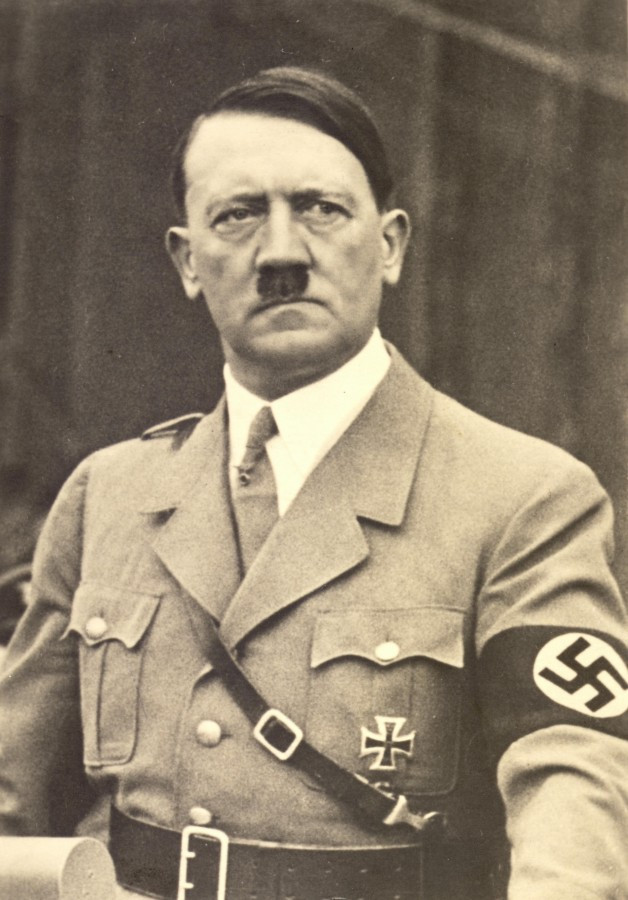
Before the conflict escalated, in 1933 Nazi Germany stood on the stage, led by Adolf Hitler, the Leader of Germany and the Founder of Fascism. Their ideology, Nazism, was a kind of racial nationalism, which both the U.S.A and the Soviet Union thought as a bigger threat to themselves. The Nazism is a combination racial nationalism and imperialism. For the U.S., nationalism can only cause chaos and do harm to a liberated world. And for the Soviet Union, imperialism comes from capitalism, and is the enemy of communism as well. As a result, both of them fought as allies temporarily.
https://www.historycrunch.com/joseph-stalin.html#/
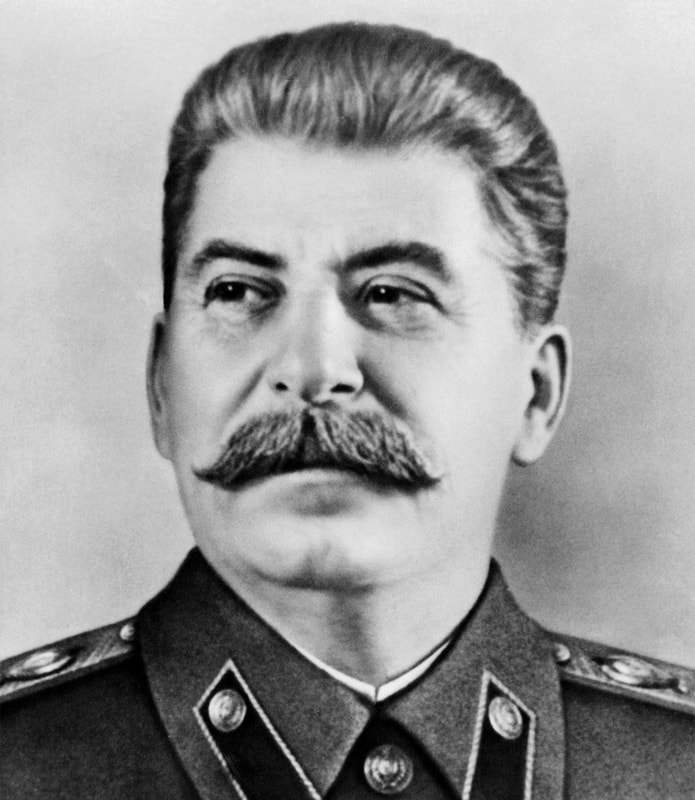
In year 1945, the Nazi Germany was defeated, which means the U.S.A. and the U.S.S.R. did not have a common enemy anymore. Even though they were once alliance, their ideology was inveterate. With the Soviet Premier, Joseph Stalin, the U.S.S.R. was seen as a autocratic countries by other capitalist countries. At the same time the Soviet Union continued to regard the U.S.A. as a country of capitalism, and tended to eliminate them. Eventually the conflict escalated in 1947, and the Cold War broke out.
The Cold War ended in 1991 with the collapsing of the U.S.S.R., yet the ideological conflict still has its effect on the international relations. In my opinion, an ideological conflict like the Cold War cause great damages to the whole world. The economic situation in Middle East and South-East Asia was dragged down. The Korean War and the Vietnam War caused great casualty. A great ideological gap was created during the Cold War between the Western countries and other parts of the world. Looking at the US-China conflict today, will it become another cold war? Nobody can know.
3, Reflection
I have met challenges when writing this opinion piece. As I write in the introduction, unlike academic pieces, the opinion piece is for the general public. Therefore I have to change my expression and explain all the professional terms. I was quite struggling in this part, because some terms, like Fascism, was quite well known to the general public. I was not sure whether I should explain these terms. As a result, I use the hyperlink function, to link these terms to Wikipedia or other website for explanation.
Another challenge was the passive voice. In the academic writing I always use passive voice, so that my text could be sound objective and reliable. However in an opinion piece, the overuse of the passive voice could make the text hard to understand. So I had to change some of the sentences into active voice.
In the text, I have written many long sentences. However I am really not good at writing long sentences, so some of my sentences became very hard to understand. I should have written short, but understandable sentences.
As Janne commented, this text should be more like an opinion piece. I should add more opinion to the text. I’ve add some opinions in this version. In the seminar, Susan has also given me some excellent advice about adding pictures to the text. It makes my opinion piece colorful and easy to read.
 Han's Professional Literacies
